
Infection Control
Infection Control at Community Level
The Zoonoses Information Systems Lab integrates on-ground and remotely sensed data with tools to guide and explore the pattern of distribution of coldspots and hotspots of human-animal diseases, especially rabies, influenza and Lassa fever, indicating the association between behavioural and biologic risk factors in driving the occurrence and pattern of spread of these diseases. The laboratory enables opportunity for planning and coordinating community outreach projects, decision support dashboards, monitoring tools and data collection progress in epizootiology, risk analysis and response plans of the centre across selected communities.
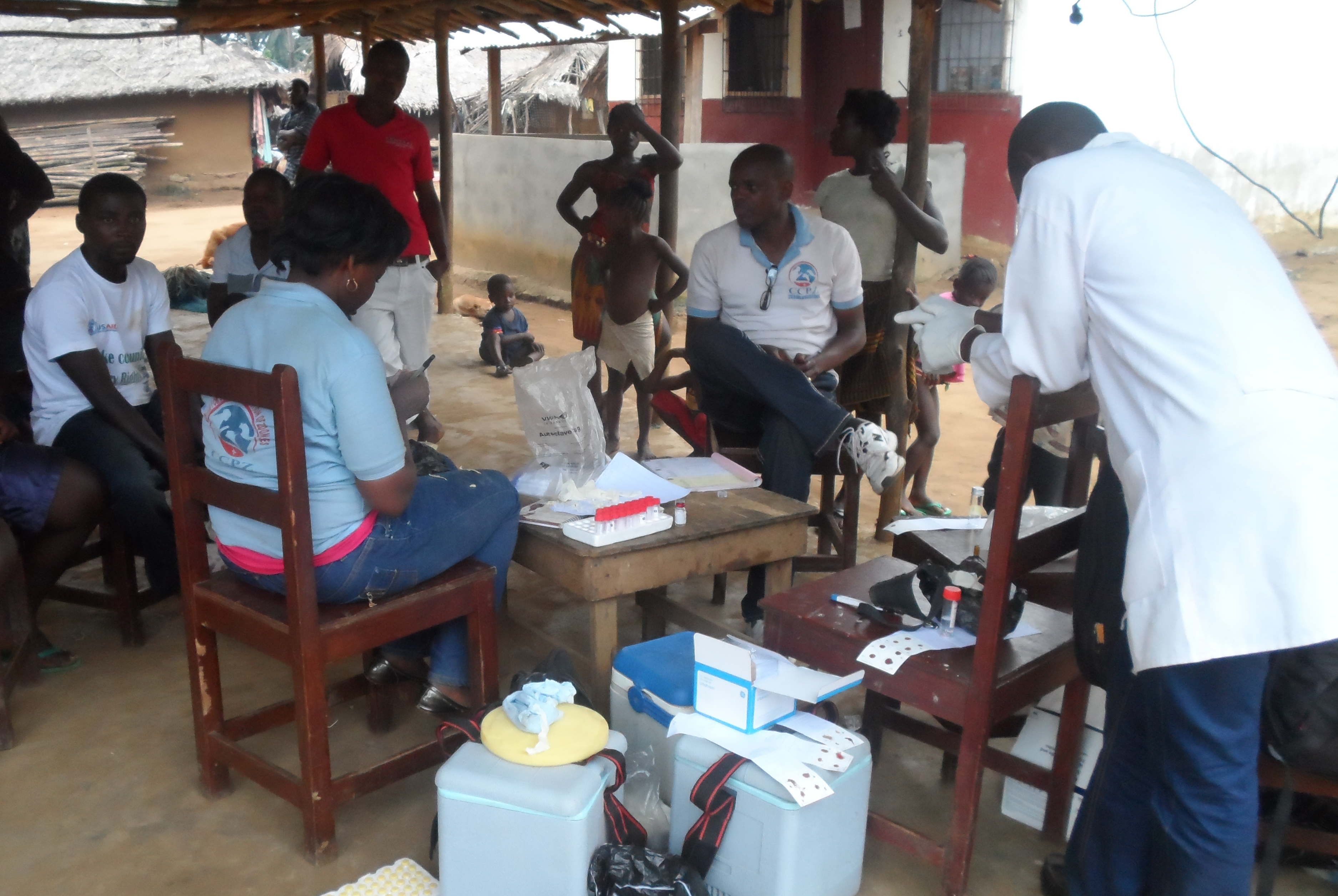
Zoonoses Information System is designed to provide evidence-based decision support systems on priority diseases for control in West Africa and user friendliness capacity for participatory intervention. The laboratory facility supports teaching an interdisciplinary GIS and Zoonoses Risk Management at Master’s and Doctoral degree levels.
CCPZ supports intervention in disease control through the Society for Epizootiology in West Africa as a consortium of the Center. The Consortium includes the University of Ibadan, Nigeria Federal Ministry of Health, the Nigerian Veterinary Medical Association, the Nigerian Institute of Science Laboratory Technology, the National Veterinary Research Institute, Nigeria, the University of Ghana, the Ghana Veterinary Medical Association, the Ghana Ministry of Food and Agriculture, Cuttington University, Liberia, the Liberia Ministry of Agriculture, the Liberia Ministry of Health and Social Welfare, Njala University, Sierra Leone and the Animal Health Club, Sierra Leone. Faculty and students in these institutions and career officers engage in joint design and intervention in research projects, managing disease spread and managing outbreaks.
CCPZ Scholars' Publications
1. Olugasa BO, Jomah ND, Dogba JB, Ishola OO, Olarinmoye AO, Adeola OA, et al. (2020) Improving dog bite victim survey and estimation of annual human deaths due to suspected rabies cases in three selected Liberian cities and environs, 2008–2017. PLoS Neglected Tropical Diseases 14(12): e0008957. https://doi.org/10.1371/journal.pntd.0008957
2. Olarinmoye AO, Ojo JF, Fasunla AJ, Ishola OO, Dakinah FG, Mulbah CK, et al. (2017) Time series analysis and mortality model of dog bite victims presented for treatment at a referral clinic for rabies exposure in Monrovia Liberia, 2010–2013. Spat Spatiotemporal Epidemiol. 2017; 22:1–13. https://dx.doi.org/10.1016/j.sste.2017.04.003 https://pubmed.ncbi.nlm.nih.gov/28760263/ pmid:28760263
3. Olarinmoye AO, Kamara V, Jomah ND, Olugasa BO, Ishola OO, Kamara A, et al. (2019) Molecular detection of rabies virus strain with N-gene that clustered with China lineage 2 co-circulating with Africa lineages in Monrovia, Liberia: first reported case in Africa. Epidemiology and Infection;147:e85. pmid:30868993; PMCID: PMC6518606. https://doi.org/10.1017/S0950268818003333
4. Olugasa, B. O., Odigie, E. A., Lawani, M. and Ojo, J. F. (2015). Development of a time-trend model for analyzing and predicting case pattern of Lassa fever epidemics in Liberia, 2013-2017. Annals of African Medicine Vol. 14, No.2:89-96 https://journals.lww.com/aoam/fulltext/2015/14020/development_of_a_time_trend_model_for_analyzing.3.aspx